Learn Korean
-
Hangul 114: Giving Reasons with -아서/어서 and -(으)니까
내가 왜 그렇게 느끼는지, 왜 그렇게 했는지 이야기할 수 있어야 대화가 깊어진다. 지난 시간에 마음을 표현하는 법을 배웠다면, 오늘은 그 이유를 말해 보기로 하자. Before We Start In Hangul 113, you learned how to say how you feel. The natural next step is saying why. In English, “because” comes before the reason: “I stayed home…
-
Hangul 113: Expressing Feelings and Opinions
“좋아요”와 “싫어요”만으로는 내 마음을 다 말할 수 없다. 기쁘지만 조금 불안하고, 서운하지만 화가 난 건 아닌 순간들이 있다. 오늘은 그런 마음을 한국어로 자연스럽게 꺼내는 법을 배워 보기로 하자. Before We Start In Hangul 112, you learned how to ask questions. Now it’s time to answer them with something more interesting than “good” or “bad.” Korean…
-

Hangul 112: Asking Questions Naturally
Part of the Learn Korean series on Gentle Path Living Before We Start So far, most of the example sentences in this series have been statements — telling someone what you did, what you’re doing, or what you’ll do. But conversation is just as much about asking as it is about telling. “What did you…
-

Hangul 111: Connecting Two Ideas — -고, -지만, -아서/어서
Part of the Learn Korean series on Gentle Path Living Before We Start You’ve now covered the three core tenses — present, past, and future. But so far, every example sentence has been short and standalone: “I ate.” “I went.” “I’ll call.” Real conversation rarely works that way. We connect ideas: “I ate and then…
-

Hangul 110: Talking About What’s Coming — The Future Tense
Part of the Learn Korean series on Gentle Path Living Before We Start You now know how to talk about the present (Hangul 107) and the past (Hangul 109). The last piece of the puzzle is the future — how to say what you’re going to do, or what you will do. Korean actually has…
-
Hangul 109: Talking About Yesterday — The Past Tense
Part of the Learn Korean series on Gentle Path Living Before We Start In Hangul 107, you learned how to talk about what’s happening now — the present tense. But conversations aren’t just about the present. “What did you eat?” “I went home.” “She called me yesterday.” These are some of the most common sentences…
-

Hangul 108: 이에요/예요 — How to Say “It Is” in Korean
오늘은 한국어로 “~이에요 / ~예요”라고 말하는 방법을 배워볼 거예요. 아마 자주 듣는 표현이라 재미있을 거예요. 영어의 “It is,” “I am,” “You are”와 비슷한 역할을 하는 아주 중요한 표현이에요. “저는 학생이에요.”“이건 김치예요.”“제 이름은 수진이에요.” 한국에서는 하루에도 정말 많이 사용하는 표현이죠. 지난 시간에 -아요/-어요를 배웠다면 오늘 수업은 조금 더 쉽게 느껴질 거예요. Let’s get started! What are…
-
Hangul 100: Korean Words Every Korean-American Child Should Know
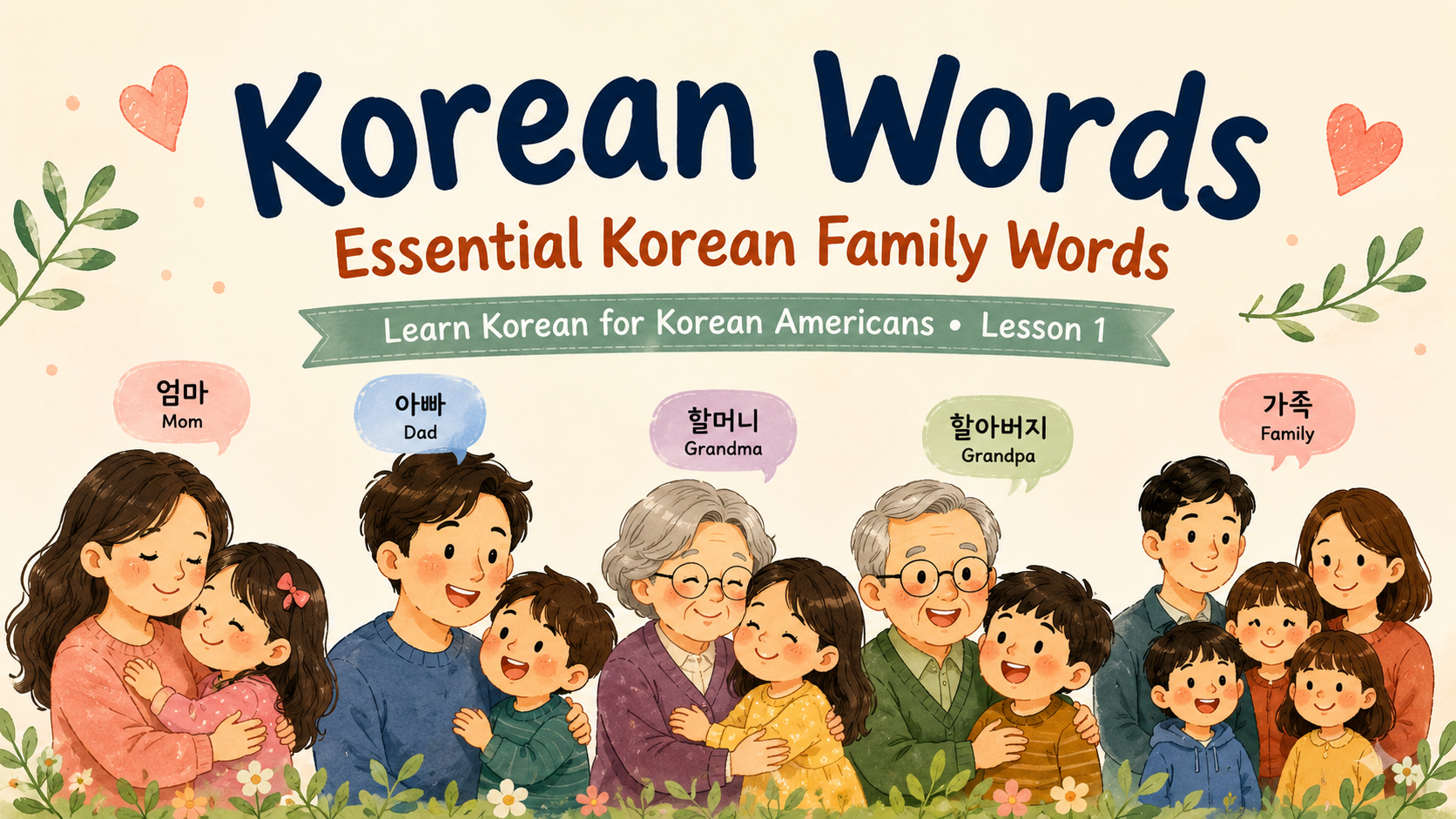
미국에서 자란 아이들이 꼭 알아야 할 한국어 단어들 Learn Korean for Korean Americans class #1 Many Korean-American children grow up speaking mostly English. That is completely natural when living in the United States. However, learning even a few Korean words can help children connect with their parents, grandparents, family traditions, and cultural heritage. You do…
-
Hangul 101: Reading Korean Letters for the First Time
오늘부터는 처음부터 한글을 배우려는 나의 딸들과 미래의 손주들을 위한 한글공부를 시작해보려고 해요. 엄마 아빠에게서 한글을 듣고 알아들을 수도 있지만 막상 말을 하려면 잘 안되는 우리 한인 2세들, 한국어를 배우고 싶어하는 많은 외국인 친구들을 위한 좋은 기회가 되길 바라는 마음이에요. 꾸준히 따라오면 다음 서울 방문은 문제가 없겠죠? 한 번 시작해볼까요? Whether you grew up hearing Korean…
-
Hangul 102: Double Consonants and Combination Vowels
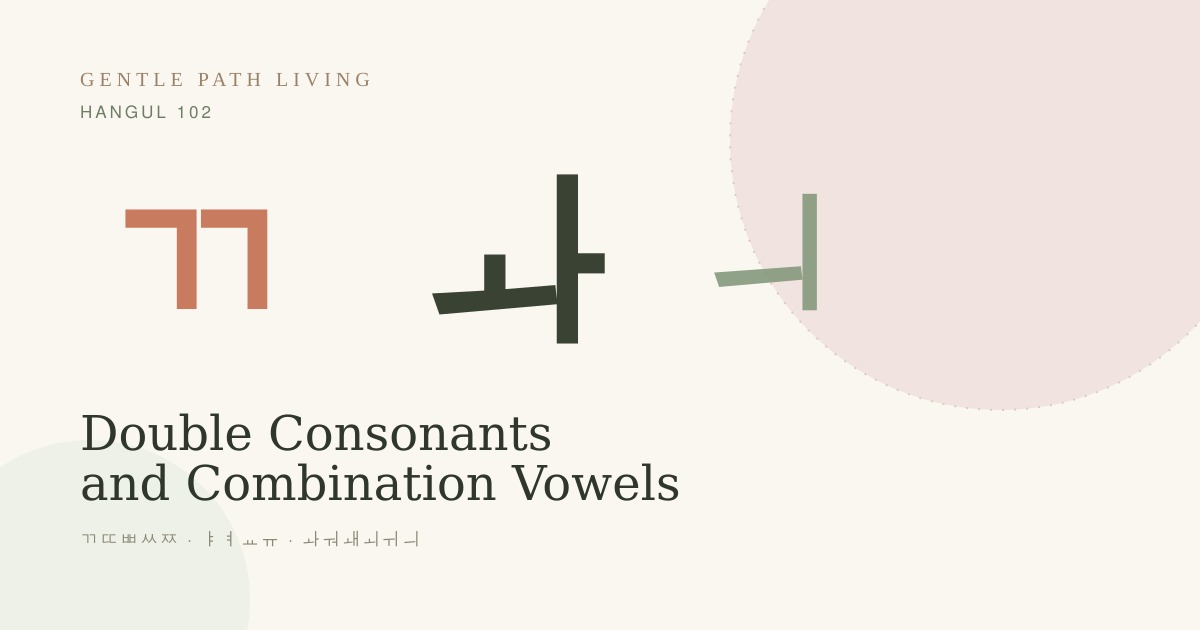
안녕하세요? 오늘은 쌍자음과 쌍모음에 대한 수업이에요. 쌍이라는 말은 couple이란 의미로 많이 쓰여서 두 개가 겹쳐진다는 의미에요. 영어로 double이라고 하는 게 좋겠죠. In the last post, we covered the 10 basic consonants and 8 basic vowels — enough to start sounding out simple words like 한국 and 사랑. Today we’re finishing the alphabet: the “tense” double…